Yahoo!
Description
The lecture will address the assessment and treatment of Obsessive-Compulsive Disorder (OCD) -Scrupulosity subtype. Scrupulosity is characterized by excessive concern over moral, religious, or ethical correctness. Scrupulosity often involves compulsions, such as excessive prayer, repeated OCD-infused, faith-based rituals, or reassurance-seeking behaviors from family and clergy members. The assessment phase of the training will focus on the use of the Clinical Interview and the Yale-Brown Obsessive-Compulsive Scale (YBOCS; Goodman et al., 1989).
Treatment strategies will focus on Exposure and Response Prevention (ERP), a first-line cognitive-behavioral therapy (CBT) intervention that is effective in treating scrupulosity (Abramowitz et al., 2019). ERP involves systematic exposure to feared stimuli, e.g., religious doubts or impulses to engage in OCD-ritualized behaviors, while preventing the accompanying compulsive behaviors that reinforce the disorder (Twohig et al., 2020). Acceptance-Commitment Therapy (ACT) strategies will also be discussed to supplement effective OCD treatment (Soondrum et al., 2022).
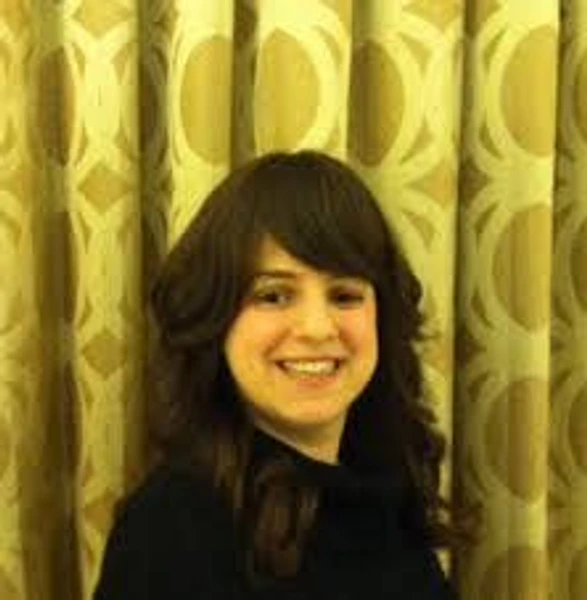
About the Presenter:
Learning Objectives:
- Describe the cognitive-behavioral framework used in the diagnosis and treatment of Obsessive-Compulsive Disorder (OCD), with a focus on the scrupulosity subtype
- Demonstrate how to administer and interpret the Yale-Brown Obsessive Compulsive Scale (Y-BOCS) as part of a clinical assessment for OCD.
- Apply Exposure and Response Prevention (ERP) techniques in clinical practice to address compulsive behaviors associated with religious and moral obsessions in scrupulosity.
Agenda:
Agenda
00:00–00:05 | Introduction & Overview
-
Welcome and objectives
-
Defining Obsessive-Compulsive Disorder (OCD)
-
Introduction to scrupulosity as a subtype of OCD
00:05–00:10 | Theoretical Foundations
-
Learning theory and OCD: Classical and operant conditioning
-
Cognitive-behavioral conceptualization of OCD
-
Dispelling myths: Fact vs. fiction in OCD and scrupulosity
00:10–00:20 | Assessment Strategies
-
Clinical Interview techniques for identifying scrupulosity
-
Overview and administration of the Yale-Brown Obsessive Compulsive Scale (Y-BOCS)
-
Understanding OCD subtypes and their clinical presentation
00:20–00:30 | The Role of Collaterals and Case Conceptualization
-
Using family, clergy, and community input in assessment
-
Therapist “dos and don'ts” when working with scrupulous clients
00:30–00:35 | Treatment Interventions: Exposure and Response Prevention (ERP)
-
Core principles and evidence base for ERP in treating scrupulosity
-
Designing effective exposure hierarchies specific to moral and religious obsessions
-
Addressing common treatment barriers and building client buy-in
00:35–00:50 | Supplementary Approaches: ACT and Scrupulosity
-
Introduction to Acceptance and Commitment Therapy (ACT)
-
The ACT Hexaflex and its relevance to OCD treatment
-
Integrating ACT into ERP-based care
00:50–01:00 | Clinical Application & Q&A
-
Case vignettes and treatment planning examples
-
Open Q&A and discussion
-
Summary of key takeaways and recommended resources
This presentation is open to:
- Behavior Analysts
- Social Workers
- Professional Counselors
- Therapists
- Psychologists
- Licensed Mental Health Practitioners
- Medical Doctors and Other Health Professionals
- Other professionals interacting with populations engaged in mental health based services
This online class is offered at an intermediate level, and is beneficial for an intermediate level clinician:
- New practitioners who wish to gain enhanced insight surrounding the topic
- Experienced practitioners who seek to increase and expand fundamental knowledge surrounding the subject matter
- Advanced practitioners seeking to review concepts and reinforce practice skills and/or access additional consultation
- Managers seeking to broaden micro and/or macro perspectives
Additional information
- Refunds: Registrants who are unable to attend a Unlimited CEs NEFESH seminar or live webinars may ask for, and will receive, a credit or refund (your choice). Refund requests will be processed within 3 business days. When an attendee knows in advance that they are unable to attend we ask that they inform Unlimited CEs NEFESH ahead of time by emailing secretary@nefeshinternational.org or by calling or texting 201-384-0084 this allows us to free up the spot in the training in the event that a training is at or near capacity.
- Disability Access: If you require ADA accommodations, please contact our office 30 days or more before the event. We cannot ensure accommodations without adequate prior notification.
- Please Note: Licensing Boards change regulations often, and while we attempt to stay abreast of their most recent changes, if you have questions or concerns about this course meeting your specific board’s approval, we recommend you contact your board directly.
- The grievance policy for trainings provided by Unlimited CEs NEFESH is available here
- Satisfactory Completion: Certificates are available after satisfactory course completion in your account or by clicking here
- Participants will receive their certificate electronically upon completion of the webinar and course evaluation form.
- There is no conflict of interest or commercial support for this program.
- System Requirements: Any device (such as a computer, tablet, or phone), Dual-Core 2 GHz or higher processor, and at least 4 GB of RAM capable of running a Zoom session, along with a stable internet connection.
- Although early registration is recommended for this class in order to ensure the best experience, attendees may register and join until the start of the program